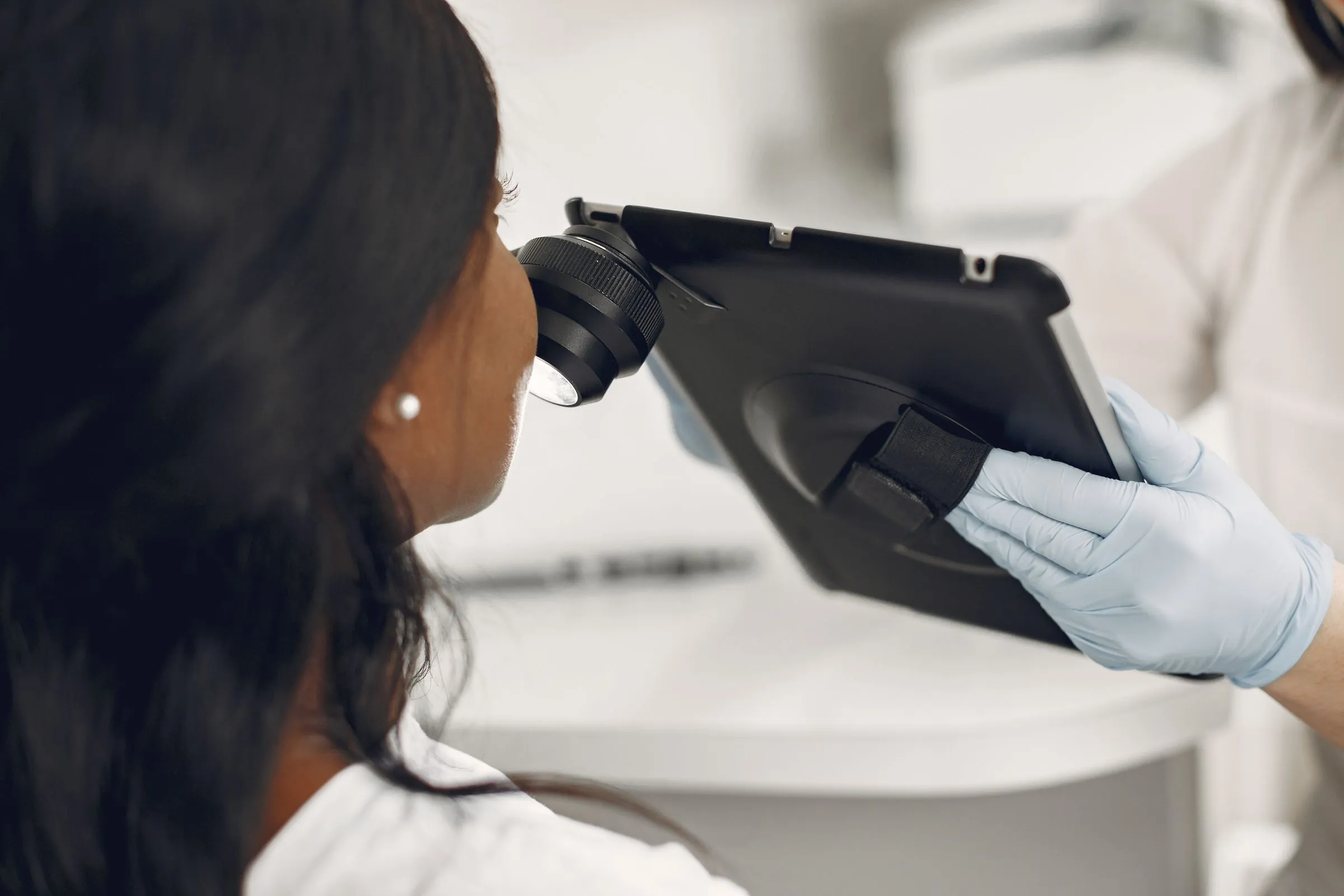

Most moles and marks on the skin are harmless. However, a mole that changes, a new spot that looks different from the others, or a lesion that repeatedly bleeds or refuses to heal should not be ignored.
In South Africa, where sun exposure forms part of everyday life, becoming familiar with your skin and recognising potential warning signs is particularly important.
Dr Esther Scott, GP Dermatologist at West Med, regularly assesses patients with suspicious moles and skin lesions. Her advice is simple: if you notice something that is new, changing or unusual, it is worth having it checked.
The types of skin cancer we commonly see at West Med
According to Dr Scott, patients presenting to West Med with suspicious skin lesions may be diagnosed with different types of skin cancer. Among the main types she encounters are Basal Cell Carcinoma (BCC), Squamous Cell Carcinoma (SCC) and melanoma.
Basal Cell Carcinoma (BCC)
Basal Cell Carcinoma is one of the more common skin cancers seen in practice.
It can appear as a shiny or pearly bump, a pink or red patch, or a sore that repeatedly bleeds, crusts, heals and then returns.
Because a BCC may initially look relatively harmless, persistent skin changes should not simply be ignored.
Squamous Cell Carcinoma (SCC)
Squamous Cell Carcinoma can appear as a rough or scaly patch, a firm raised growth, a crusted lesion or a sore that doesn't seem to heal.
It is commonly associated with areas of the skin that have experienced significant sun exposure over time.
Melanoma
Melanoma is particularly important to identify as early as possible.
It may develop from an existing mole or appear as an entirely new lesion. Changes in the size, shape, colour or appearance of a mole should therefore be taken seriously.
Dr Scott also encourages patients to look for a mole or lesion that simply appears different from the others.
What should you look for when checking your moles?
One of the easiest ways to remember the warning signs associated with melanoma is the ABCDE rule.
A - Asymmetry
One half of the mole looks different from the other.
B - Border
The edges of the mole appear irregular, blurred, scalloped or poorly defined.
C - Colour
The mole contains uneven colouring or several different shades rather than a consistent colour.
D - Diameter
Larger moles may require closer attention, particularly those larger than approximately 6 mm. However, melanoma can also occur in smaller lesions, so size should never be considered on its own.
E - Evolving
This is one of the most important warning signs.
Pay attention to a mole that changes in size, shape, colour, texture or appearance over time.
A mole that suddenly begins itching, bleeding, crusting or becoming tender should also be assessed.
Look for the “ugly duckling”
Not every suspicious mole will perfectly match the ABCDE criteria.
Dr Scott also advises patients to pay attention to what is sometimes referred to as the “ugly duckling” sign.
Most people's moles tend to have a relatively similar appearance. If one mole is noticeably darker, larger, differently shaped or simply looks unlike the others, it may warrant closer examination.
A useful rule to remember is: if it's new, changing or different, get it checked.
Not every skin cancer looks like a mole
It is also important to remember that skin cancer does not always present as a dark or unusual mole.
Dr Scott recommends seeking medical advice if you notice:
- A sore that doesn't heal
- A lesion that repeatedly bleeds or crusts
- A new or rapidly growing spot
- A mole changing in shape, size or colour
- Persistent itching or tenderness
- A new or unexplained lump or bump
- A spot that looks noticeably different from the others on your skin
Having one of these symptoms does not automatically mean that you have skin cancer. Many harmless skin conditions can cause similar changes.
However, a persistent or changing lesion is worth having professionally assessed.
Can people with darker skin get skin cancer?
Yes. Skin cancer can affect people of all skin tones.
While certain skin cancers are more common in people with lighter skin, melanoma can still occur in people with darker skin.
Melanoma can also develop in areas that receive relatively little sun exposure, including the palms of the hands, soles of the feet and around or underneath the nails.
Regardless of your skin tone, unusual or changing lesions should not be ignored.
How often should you check your skin?
Dr Scott encourages patients to become familiar with what is normal for their own skin.
A simple approach is to perform a monthly skin self-check.
Don't only look at the obvious areas. Check your scalp, ears, back, arms, hands, legs, feet, between your toes and around your nails.
Ask a partner or family member to help check areas that are difficult to see, particularly your scalp and back.
The goal isn't to diagnose skin cancer yourself. It is to recognise when something has changed so that you know when to seek professional advice.
Dermatology at West Med
West Med provides dermatology care at The Sanctuary in Somerset West and Majik Forest in Bellville, giving patients access to assessment and treatment for a range of skin concerns.
Patients can book a dermatology consultation for suspicious moles, changing skin lesions and other dermatological conditions.
Following an assessment, the appropriate next step may include monitoring, treatment, further investigation or referral where required.
Advanced mole mapping and skin screening at The Sanctuary
For patients who have numerous moles, a history of suspicious lesions or require more detailed skin monitoring, West Med The Sanctuary offers Advanced Mole Mapping & Skin Screening using the FotoFinder ATBM Master.
The technology allows standardised, high-resolution images of the skin to be captured and documented.
During future assessments, these images can be compared to help identify new or changing lesions that may require closer examination.
Individual lesions can also be documented using digital dermoscopy, providing detailed images that can assist Dr Scott with monitoring changes over time.
Advanced mole mapping can be particularly valuable for someone with many moles, where keeping track of every individual lesion yourself can be difficult.
The FotoFinder ATBM Master assists with imaging and documentation but does not replace clinical assessment or provide a definitive diagnosis of skin cancer.
When should you get a mole checked?
You should consider having a mole or skin lesion professionally assessed if it:
- Is new or growing
- Changes in shape, size or colour
- Develops irregular borders
- Starts bleeding, itching or crusting
- Becomes painful or tender
- Doesn't heal
- Looks noticeably different from your other moles
You don't need to wait until a mole becomes painful or causes significant symptoms before seeking medical advice.
As Dr Scott advises, if something on your skin is new, changing, different or concerning you, have it checked.
Book a dermatology consultation at West Med
If you've noticed a suspicious mole, changing skin lesion or another skin concern, West Med offers dermatology care at The Sanctuary in Somerset West, where dermatology consultations, skin assessments and Advanced Mole Mapping & Skin Screening using the FotoFinder ATBM Master are available, and at Majik Forest in Bellville, where dermatology consultations and skin assessments are available to patients in Bellville, Durbanville and the surrounding Northern Suburbs.
Knowing what is normal for your skin and recognising when something changes is one of the simplest things you can do for your skin health.
This article is general health information and is not a diagnosis. If your symptoms are severe, worsening or you are unsure, call 021 490 4380 and speak to reception rather than waiting.